deep ex report for 3d drawing
The virtually interesting thing you'll come up beyond when looking for a Computer or Workstation for 3D Modeling and Rendering is that 3D Modeling and (CPU) Rendering are two very unlike workloads.
Each of them uses the Hardware of your Estimator in very dissimilar ways!
Before nosotros dive into information technology, take a quick expect at the Tabular array of contents here, in example yous prefer to skip the theory and want to know my recommendations immediately:
Also, exist sure to drop past our Forum full of PC Enthusiasts and Manufacture Experts if you lot should have any questions!
CPU Rendering
CPU Rendering uses all cores of your CPU, 100% of the time while rendering.
This means if you lot're using your Workstation just for 3D Rendering Images and Animations, or encoding Videos for that matter, y'all would be looking for a Reckoner with a CPU, that has as many cores equally possible.
Even if these cores are clocked relatively depression.
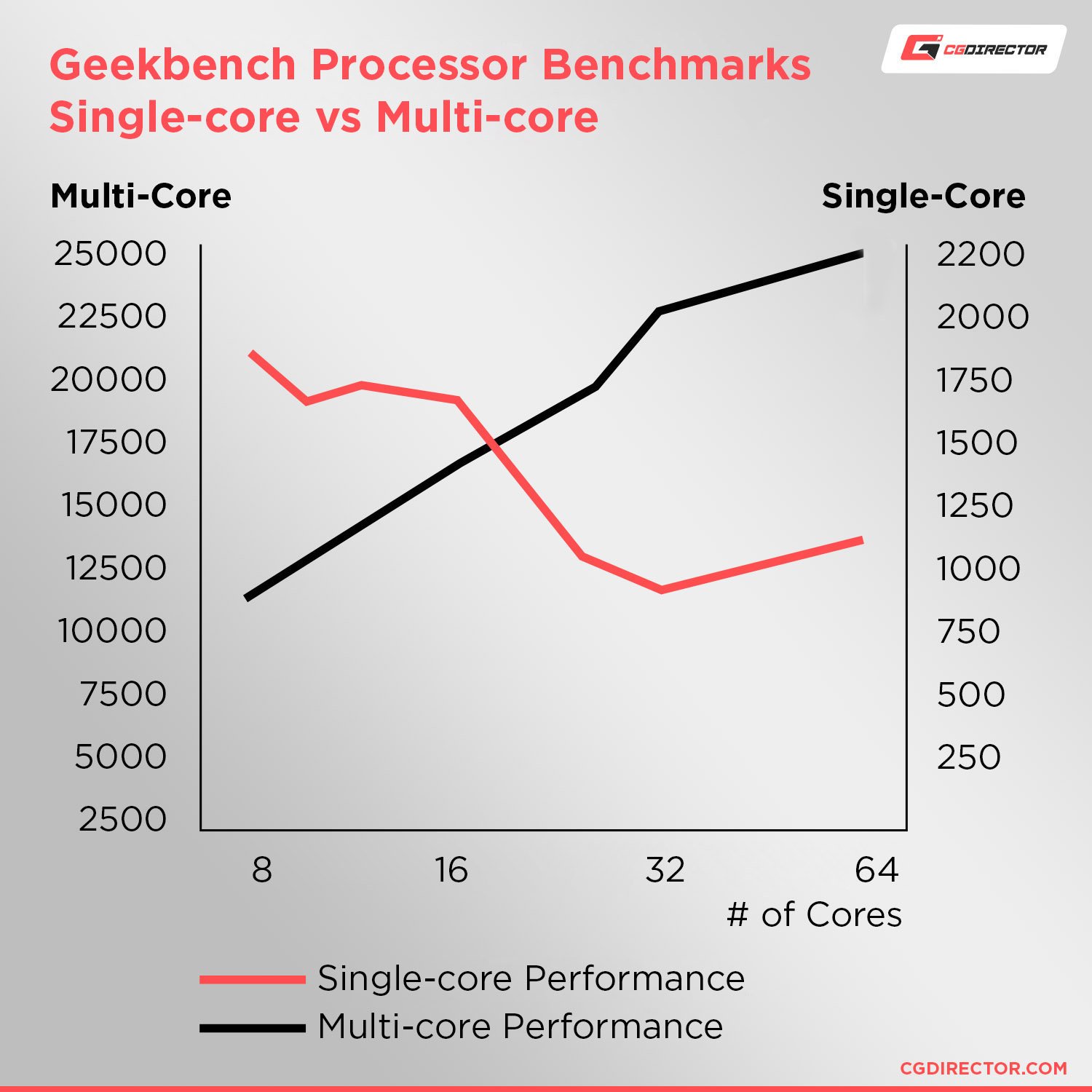
The Benchmark "Geekbench" shows at a glance how CPUs become progressively worse in single-core operation the higher their core count and vice-versa.
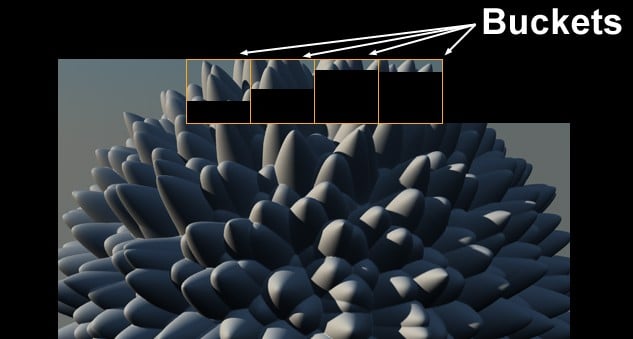
This is considering the render engine assigns a so-called "bucket" to each cadre in your CPU. Each individual core volition render its bucket and so get a new bucket in one case it'due south finished rendering the previous 1.
Because this can be easily scaled virtually indefinitely, it's a perfect workload for distributing onto CPUs with a lot of cores.
3D Modeling
Contrary to rendering, 3D modeling is an agile working process .
Yous sit in front of your computer and collaborate with one of the many 3D Softwares of your choice.
Actively using Software utilizes the Hardware information technology is running on in entirely different ways.
An instance:
I am modeling a car. That Auto consists of Polygons that will take modifiers and Deformers applied to it, such as Mirroring, Cloning, Angle Objects, so on.
Your estimator has to go through some heavy calculations to process all this, just the key here is that these calculations are mainly done on just a unmarried CPU Core.
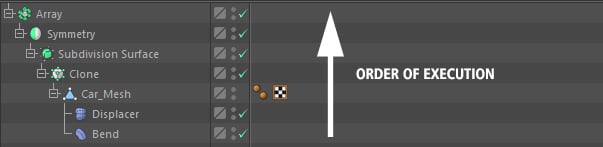
Why? Because the Scene is built according to a certain bureaucracy. A CPU has to work its manner through this hierarchy footstep by step.
It can't skip or off-load sure steps to other cores, because most of the steps depend on each other!
What does this mean?
It ways, quite frankly, that having lots of CPU-Cores volition exercise naught towards speeding up your modeling and does non ordinarily make your Viewport faster.
Long explanation short:
For Modeling and actively working in your 3D Scene, you would need to become a CPU that has the highest Clock Speed possible.
It doesn't matter if it only has a few Cores, as most of these Cores won't be used for modeling.
Take a wait at this folio to find the highest clocking CPUs currently available.
The same is also valid for working on Animations or for running a CAD Workstation. A high-Clocking CPU will almost always outperform a loftier-Core-count CPU in such (inter-)active workloads.
If you had to selection one: Which do you consider your primary 3D Software?
-
Blender 40%, 14352 votes
14352 votes 40%
14352 votes - 40% of all votes
-
3ds Max 18%, 6570 votes
6570 votes 18%
6570 votes - xviii% of all votes
-
Maya 13%, 4581 vote
4581 vote xiii%
4581 vote - 13% of all votes
-
Movie house 4D 12%, 4422 votes
4422 votes 12%
4422 votes - 12% of all votes
-
Revit 5%, 1893 votes
1893 votes five%
1893 votes - 5% of all votes
-
Zbrush v%, 1768 votes
1768 votes 5%
1768 votes - 5% of all votes
-
Other 4%, 1346 votes
1346 votes four%
1346 votes - 4% of all votes
-
Houdini 2%, 873 votes
873 votes two%
873 votes - 2% of all votes
-
Modo 1%, 185 votes
185 votes one%
185 votes - 1% of all votes
-
Artlantis 0%, 95 votes
95 votes
95 votes - 0% of all votes
-
Katana 0%, 50 votes
l votes
50 votes - 0% of all votes
Total Votes: 36135
14. May, 2020
×
Yous or your IP had already vote.
The more Cores and the college the clock speed, the better, right?
Information technology's now tempting to call back you should get a CPU with lots of cores AND loftier clock speeds . After all, then we'll have a workstation with which we tin work fast AND which can render fast, right?
Unfortunately, considering of power consumption and a CPU'due south thermal limits, we observe a proportional merchandise-off between the number of CPU cores and its clock speeds.
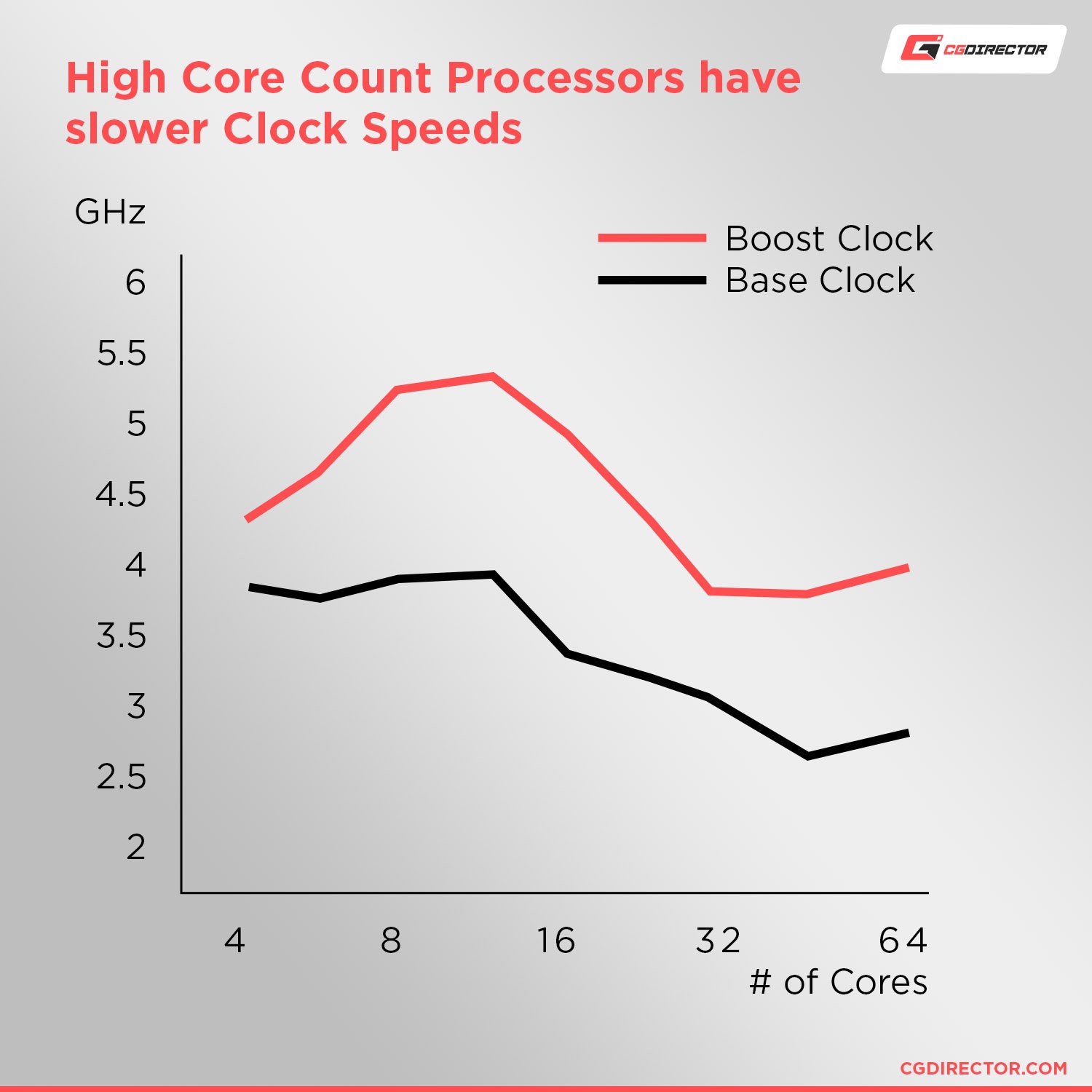
The more Cores a CPU has the lower its frequency
This means the more than Cores the CPU has, the lower its clock and vice versa.
The faster the Cores are clocked, the fewer cores in that location usually are on the CPU.
Many Cores demand lots of Power and lots of Ability produces lots of estrus. CPUs have thermal regulations that need to be adhered to. The same applies to higher clocked cores that will exist hotter than lower clocked cores.
This is quite a bummer, but the major CPU Manufacturers wouldn't be all that major if they hadn't establish a way to improve upon this.
AMD and Intel have thought of a nice way of compensating for some of these merchandise-offs.
Enter Turbo-Boost.
Turbo-Boost (Turbo-Core)
Turbo-Boost is a characteristic that automatically overclocks Cores until thermal and ability limits are reached. Depending on the Quality of cooling, the boost duration can vary.
Say, we are currently modeling and are simply actually using 1-two Cores, the residuum of the CPU'south cores are idle.
What Turbo boost does now is overclock these 1-ii Cores as far as specified past the manufacturer and as long as the Power Consumption and Temperature stays within the predefined limit.
Every bit presently as these limits are reached, the Turbo-Heave volition clock these two cores back downwards.
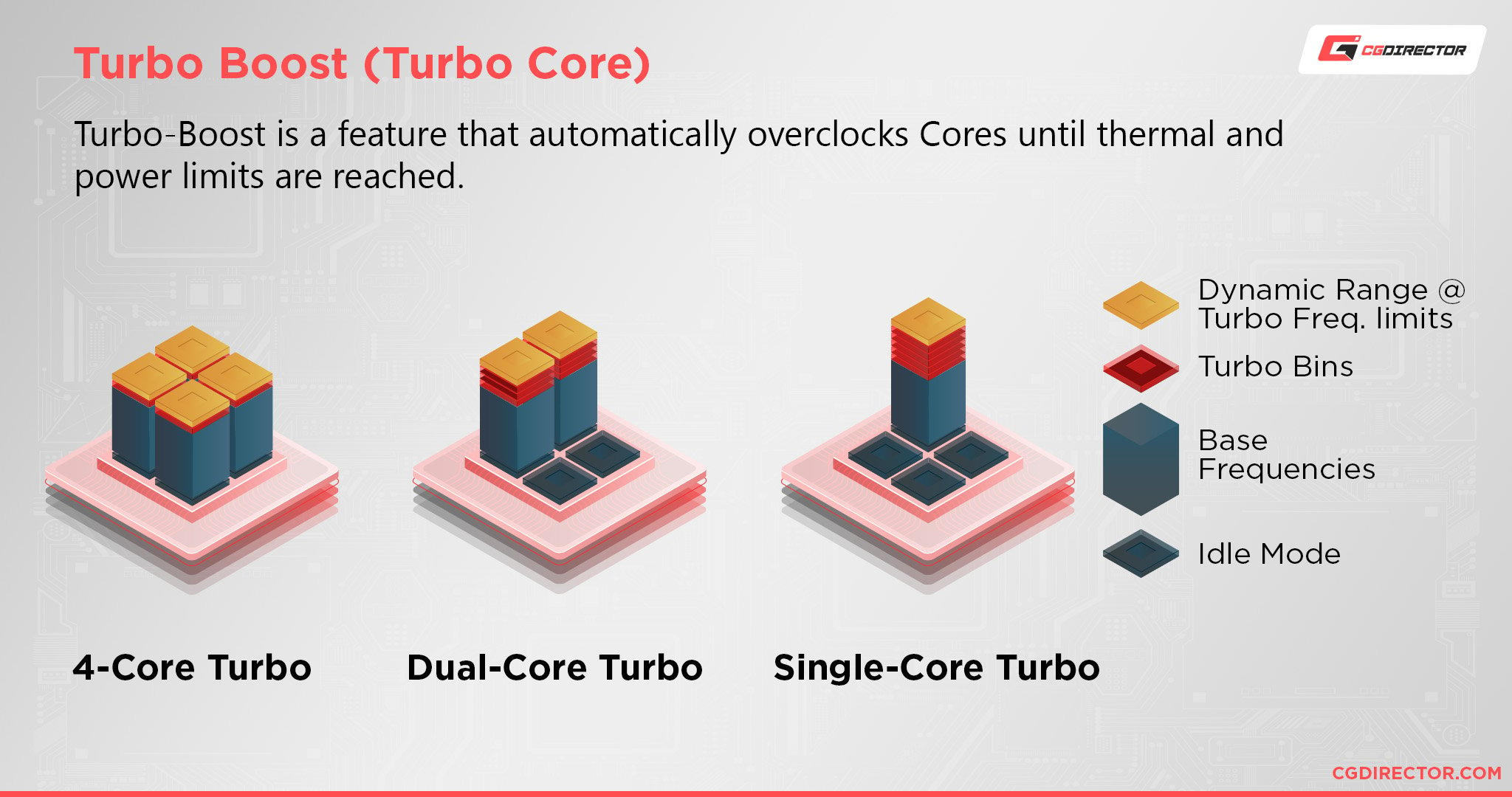
Cores can be overclocked with available temperature and power headroom
This fashion, to a certain degree, we can get CPUs with more Cores (and a depression base-clock), that clock college on limited cores, when needed and not all cores are beingness used.
CPU vs GPU Rendering
There are ii popular methods of Rendering Images and Animations in a 3D Software's Return Engine: CPU Rendering and GPU Rendering.
Are you mainly rendering on the GPU or CPU?
-
Mainly GPU 61%, 11045 votes
11045 votes 61%
11045 votes - 61% of all votes
-
Mainly CPU 39%, 7145 votes
7145 votes 39%
7145 votes - 39% of all votes
Total Votes: 18190
xiv. May, 2020
×
You or your IP had already vote.
Equally you lot probably guessed, CPU Rendering utilizes the Processor(due south), and GPU Rendering utilizes the Graphics Menu(s).
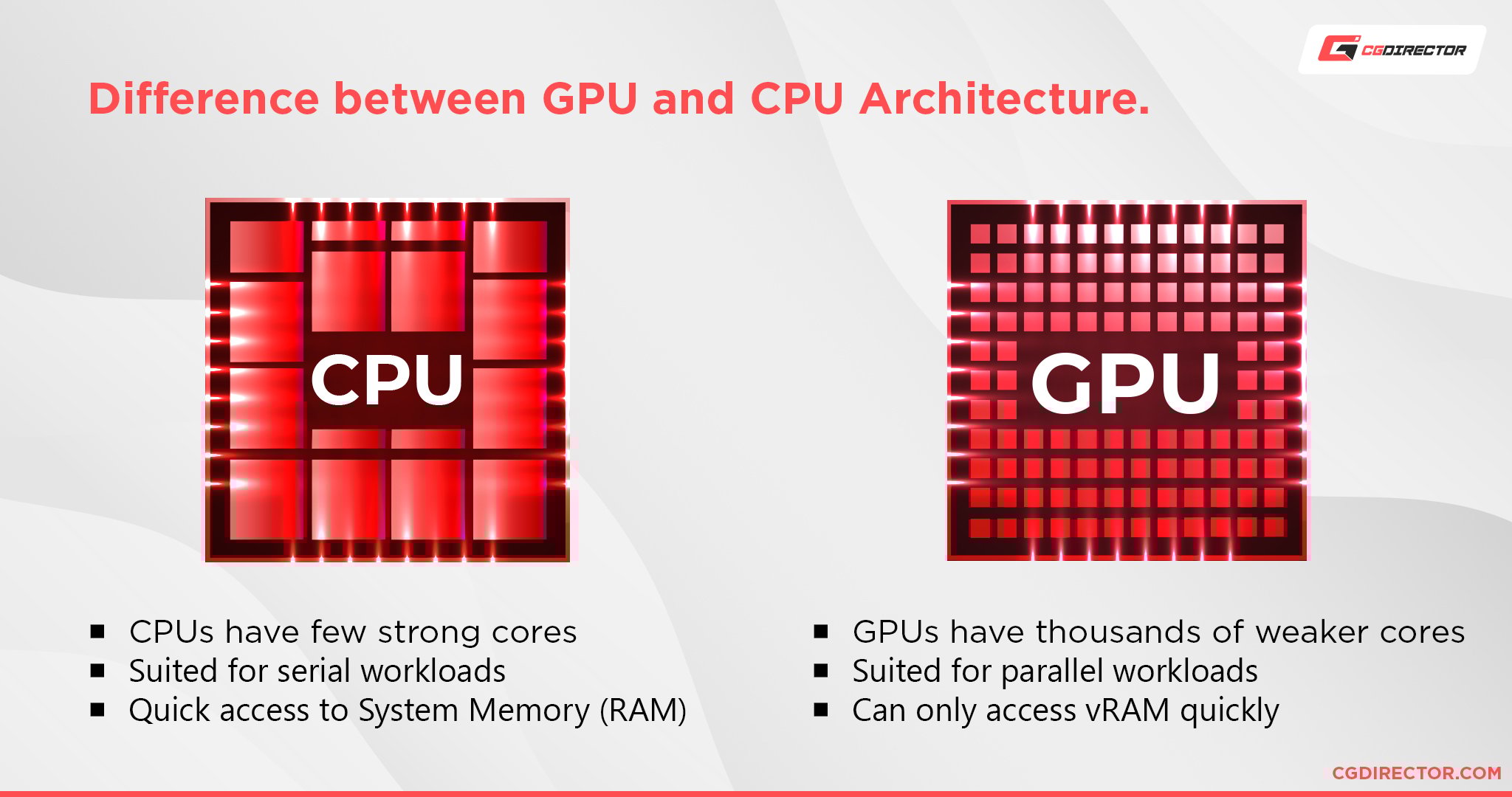
There are some differences in GPU and CPU rendering that you want to be aware of when choosing a new Figurer or Workstation for 3D Rendering and Modeling:
First of all, virtually every popular 3D Software comes with an inbuilt CPU Return Engine nowadays.
Only recently have GPU Render Engines such as Octane, Redshift, V-RAY RT, Arnold GPU, or FurryBall become mature enough to slowly but surely overtake CPU Render Engines in popularity.
Specially considering GPU Render Engines are much faster in many cases and let for interactive preview Renderers. Irresolute to a GPU Render Engine is one of the top methods in achieving faster renders – given your GPU is strong enough and has a sufficient amount of VRAM.
This can better and accelerate a 3D-Artist'south Workflow tenfold every bit y'all are able to iterate more often before completing a project.
Beginners were often told to start with 3D Rendering on the CPU and later switch to (frequently) costly 3rd-Party GPU Render Engines when they take learned enough to properly utilize them.
This has already changed.
Just look atBlender's in-built Cycles GPU Render Engine and Picture palace 4Ds newly integrated Redshift GPU Return Engine. While Movie house 4D'southward Redshift isn't free, it shows how much Maxon is willing to bet on GPU Rendering to make information technology it'due south #i Renderer for the futurity.
If you had to selection one: Which do yous consider your main Render Engine?
-
V-Ray 33%, 6285 votes
6285 votes 33%
6285 votes - 33% of all votes
-
Cycles 26%, 4935 votes
4935 votes 26%
4935 votes - 26% of all votes
-
Arnold xi%, 2117 votes
2117 votes 11%
2117 votes - 11% of all votes
-
Octane viii%, 1611 votes
1611 votes 8%
1611 votes - 8% of all votes
-
Redshift 7%, 1400 votes
1400 votes 7%
1400 votes - 7% of all votes
-
Corona 7%, 1246 votes
1246 votes 7%
1246 votes - 7% of all votes
-
Other 5%, 1005 votes
1005 votes 5%
1005 votes - 5% of all votes
-
Mental Ray 2%, 302 votes
302 votes 2%
302 votes - 2% of all votes
-
Maxwell i%, 170 votes
170 votes 1%
170 votes - 1% of all votes
Full Votes: 19071
14. May, 2020
×
You or your IP had already vote.
Best private Hardware Parts for 3D Modeling and Rendering explained
But plenty talk! Let'south take a expect at what specific Computer Parts you'll need for the best Computer or Workstation for 3D Modeling and Rendering:
Best Processor (CPU) for 3D Modeling and Rendering
For Active Piece of work: Intel i9 12900K or AMD Ryzen 9 5950X
As explained above, you'll have to make a decision depending on what yous volition use your computer for almost.
Do you use information technology mainly to Model, Sculpt, Texture, Light, Animate and do you spend much more time inter actingwith it, than (passively) rendering on it?
And so you'll desire a CPU that is clocked as high every bit possible!
Practiced choices hither are:
- Intel i9 12900K, 16-Cores, Clocked at three,2 GHz Base, 5,2 GHz Boost
- Intel i9 12700K, 12-Cores, Clocked at three,6 GHz Base of operations, five,0 GHz Heave
- AMD Ryzen nine 5950X, 16-Cores, Clocked at 3,4 GHz Base, 4,ix GHz Boost
- AMD Ryzen 9 5900X, 12-Cores, Clocked at 3,vii GHz Base of operations, 4,viii GHz Boost
- AMD Ryzen 9 5600X, 6-Cores, Clocked at three,seven GHz Base, iv,6 GHz Boost
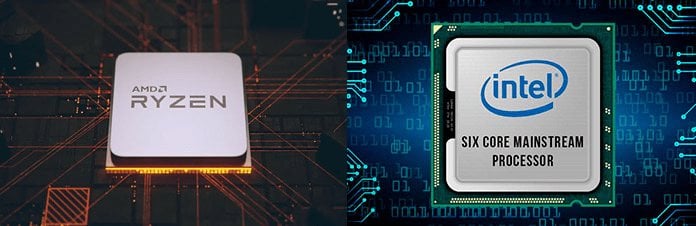
Image-Source: AMD/Intel
A great criterion for finding CPUs that are the snappiest is the Cinebench Single-Core Benchmark.
Take a look at this page with Cinebench R23 Benchmarks and sort the Table on the "Cinebench Single" cavalcadeto find the CPU that will give your workstation the best operation when yous're actively working on information technology.
What CPU Core-Feature is more valuable / important to you?
-
Having High Core-Clocks for fast active work (e.chiliad. i9 10900K) 56%, 3616 votes
3616 votes 56%
3616 votes - 56% of all votes
-
Having a lot of Cores for fast Multi-Processing (e.g. TR 3990X) 44%, 2808 votes
2808 votes 44%
2808 votes - 44% of all votes
Total Votes: 6424
fourteen. May, 2020
×
You or your IP had already vote.
If yous have the budget for an AMD Ryzen 9 5950X or the Intel i9 12900K, these CPUs are in the pb for active Work such as Modeling and Blitheness. They likewise sport 16 Cores which gives you lot skillful multi-core CPU rendering performance.
Texturing 3D Models and painting or sculpting, likewise, need a loftier-clocking CPU. If you consider yourself a Graphic Designer and do less Rendering, the AMD Ryzen 9 5900X is an excellent selection.
For Render Piece of work? AMD Threadripper CPUs such every bit the Threadripper 3960X!
Do you lot utilise this Workstation less for active work and more to Render out your Projects? Exercise y'all spend more than fourth dimension on Rendering than on really sitting in front of it?
Yous should consider going into a high cadre-count management which are the best CPUs for Rendering (Or if you desire a second Figurer just for Rendering on).
Good choices hither are:
- AMD Threadripper 3960X, 3970X, 3990X – 24-64 Cores
If you want to use VRAY, as information technology is one of the virtually pop Render Engines available, have a expect at the following folio to go an overview of the VRAY CPU Benchmarks Results.
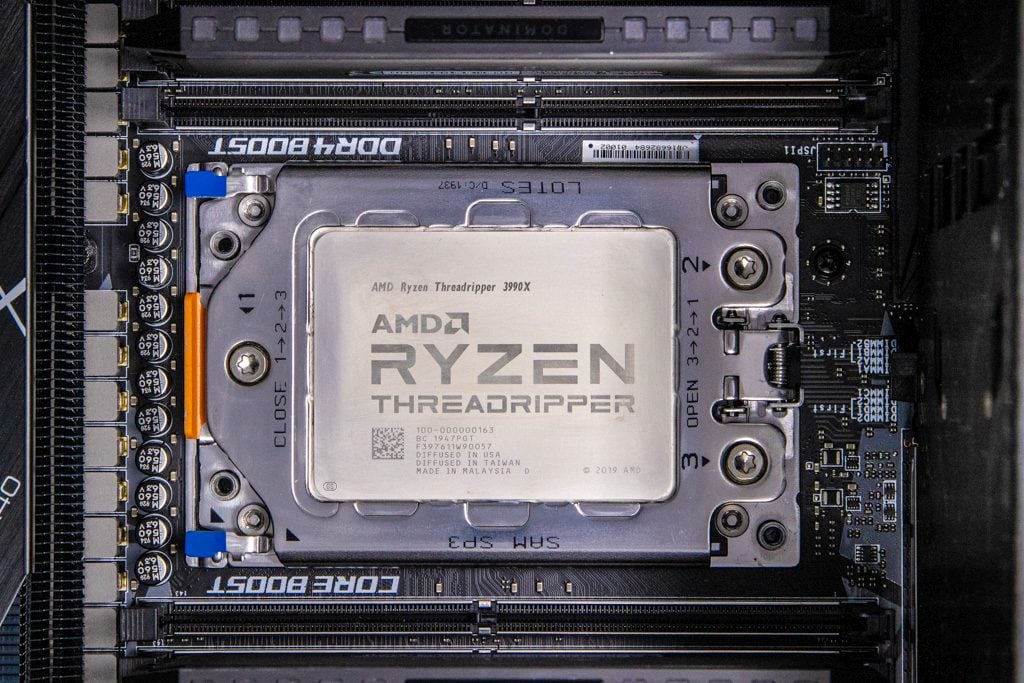
The 3990X inside our Review System
Considering Rendering demands can be quite high, and a single PC might non be enough to crunch through all of your frames in a short time, be certain to bank check our guide on edifice your own Render Subcontract.
Which CPU are yous planning on Buying?
-
AMD Ryzen (e.g. 2700X, 3700X, 3900X...) 60%, 4677 votes
4677 votes sixty%
4677 votes - 60% of all votes
-
Intel LGA 1151 Serial CPU (e.thou. i7 8700K, i9 9900K...) 19%, 1478 votes
1478 votes 19%
1478 votes - nineteen% of all votes
-
AMD Threadripper (e.m. 2950X, 3960X...) xvi%, 1256 votes
1256 votes 16%
1256 votes - xvi% of all votes
-
Intel 2066 (HEDT) Ten-Series CPU (e.k. i9 10980XE...) five%, 350 votes
350 votes 5%
350 votes - 5% of all votes
Total Votes: 7761
fourteen. May, 2020
×
Y'all or your IP had already vote.
All-time Graphics Bill of fare (GPU) for 3D Modeling and Rendering
Best GPU for GPU Rendering: GPU Rendering is becoming more popular as we speak and is likely to overtake CPU Rendering in the near future.
Some of the virtually pop modernistic GPU Render Engines are Octane, Redshift, VRAY-RT, and Cycles. The get-go two only support NVIDIA GPUs, while the latter besides supports AMD (OpenCL) GPUs.
Personally, I prefer recommending GPUs that work with any of the popular Return Engines (CUDA Support), so here are a few NVIDIA GPUs in order of Performance that will give yous splendid GPU Rendering Speed:
- NVIDIA RTX 3090
- NVIDIA RTX 3080
- NVIDIA RTX 3070
- NVIDIA RTX 3060 Ti
- NVIDIA RTX 2070 Super
- NVIDIA RTX 2060 Super
- NVIDIA GTX 1660 Super
This Nvidia List could keep, but I call back yous become the gist.
The higher the number, the faster and the more expensive they become.
Here is a GPU Return Benchmark overview if you'd like to compare the price to performance in a bit more particular.
Other great GPU Benchmarks to take a expect at are the VRAY-RT, Octane, and Redshift benchmarks.
In more than Detail: Why no AMD GPUs (yet)?
The question of why nosotros are non recommending AMD GPUs at this time is certainly warranted.
While you can certainly exercise most of the 3D work with a Radeon RX 6800XT or a similar AMD GPU Model, NVIDIA GPUs merely have much wider support in GPU Return Engines and tend to perform meliorate in many content creation workloads.
While there might be some Engines that support AMD'due south GPUs, all of them support NVIDIA GPUs. If you lot want to be able to jump into different Apps and Engines without compatibility concerns, going with Nvidia is currently the ameliorate decision.
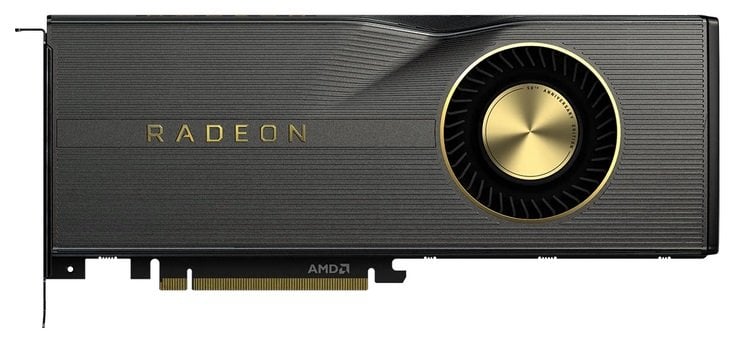
Image-Credit: AMD
This might just be temporary though, as many Render Engine Developers (Redshift, Octane, and more) have announced to work on implementing support for AMD GPUs.
Of form, if you know exactly that you volition exist using ProRender or other Engines with AMD GPU Support, go for it! AMD's offerings have great value.
Earlier picking multiple GPUs for Rendering, yous should give our guide on blower vs open up-air cooled GPUs a quick read.
Best GPU for Viewport performance
Every bit the Processoris normally the clogging hindering you from having a snappy Viewport, Graphics Cards don't make a noticeable divergence, if you buy in a higher place a certain performance tier.
All the GPUs listed above will perform roughly the same in Viewport performance.
This is considering there are rarely features in 3D Applications, that the GPU computes slower than information technology takes the CPU to update Meshes, Deformers, etc.
In other words: The GPU usually has to wait for the CPU to finish its tasks to go along working.
This beingness said, if you rely heavily on In-Viewport SSAO, Reflections, AO, Anti-Aliasing, etc., y'all might desire to lean towards the meridian of the above GPU list for a snappy Viewport.
But for most, a high clocked CPU will make a much larger difference.
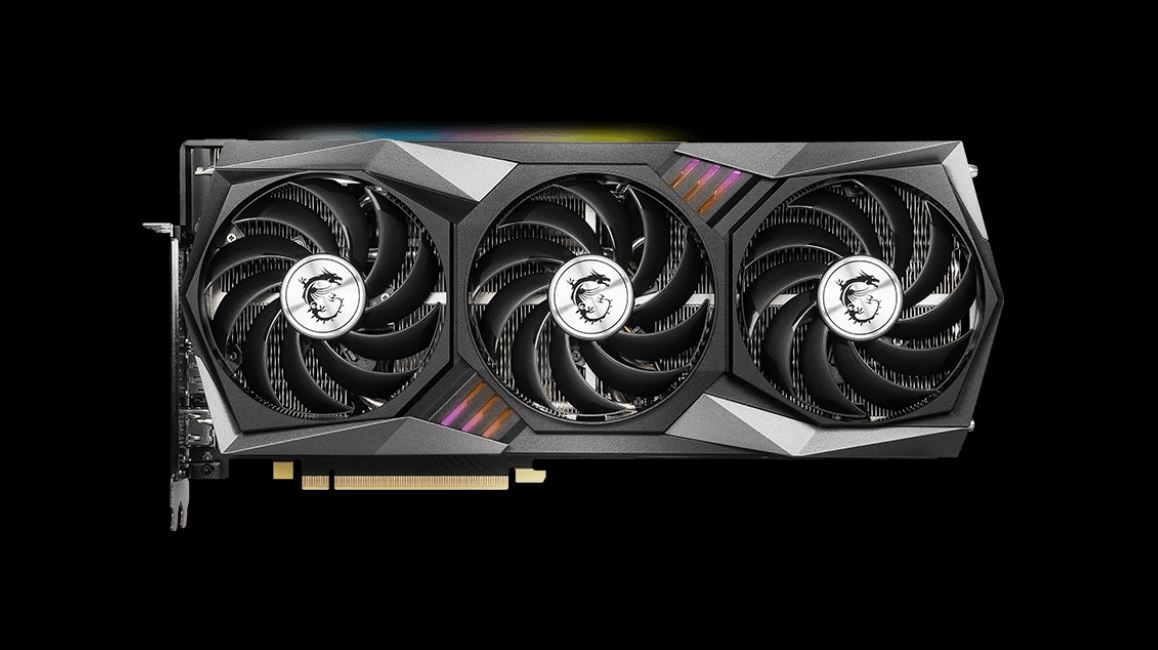
Let's pick the Nvidia RTX 3070 for our Best Computer for 3D Modeling and Rendering, every bit it has excellent GPU-Render value and is fast enough for any kind of Viewport challenges.
Epitome-Credit: MSI
A quick heads-upward:
In rare cases, if you simply use a few extremely high-poly RAW meshes (such every bit a CAD-Converted Machine with twoscore Million Polygons) and y'all don't accept any modifiers on this mesh, and so the GPU may get the bottleneck every bit your workstation only has to update the viewing angle of the Car and non the meshs' underlying structure.
Do take a look at our Viewport-Performance Criterion and pinnacle-performing CPUs here.
How much and what type of RAM (Retentivity) practise you lot need for 3D Modeling and Rendering?
Similar to the CPU, the amount and type of retentivity (RAM) y'all'll need will depend on your workloads.
If you lot work on models with extremely high polygon counts, you will want more than RAM than when y'all tend to do 3D work with simpler scenes.
I recommend 32GB of RAM for most 3D Artists.
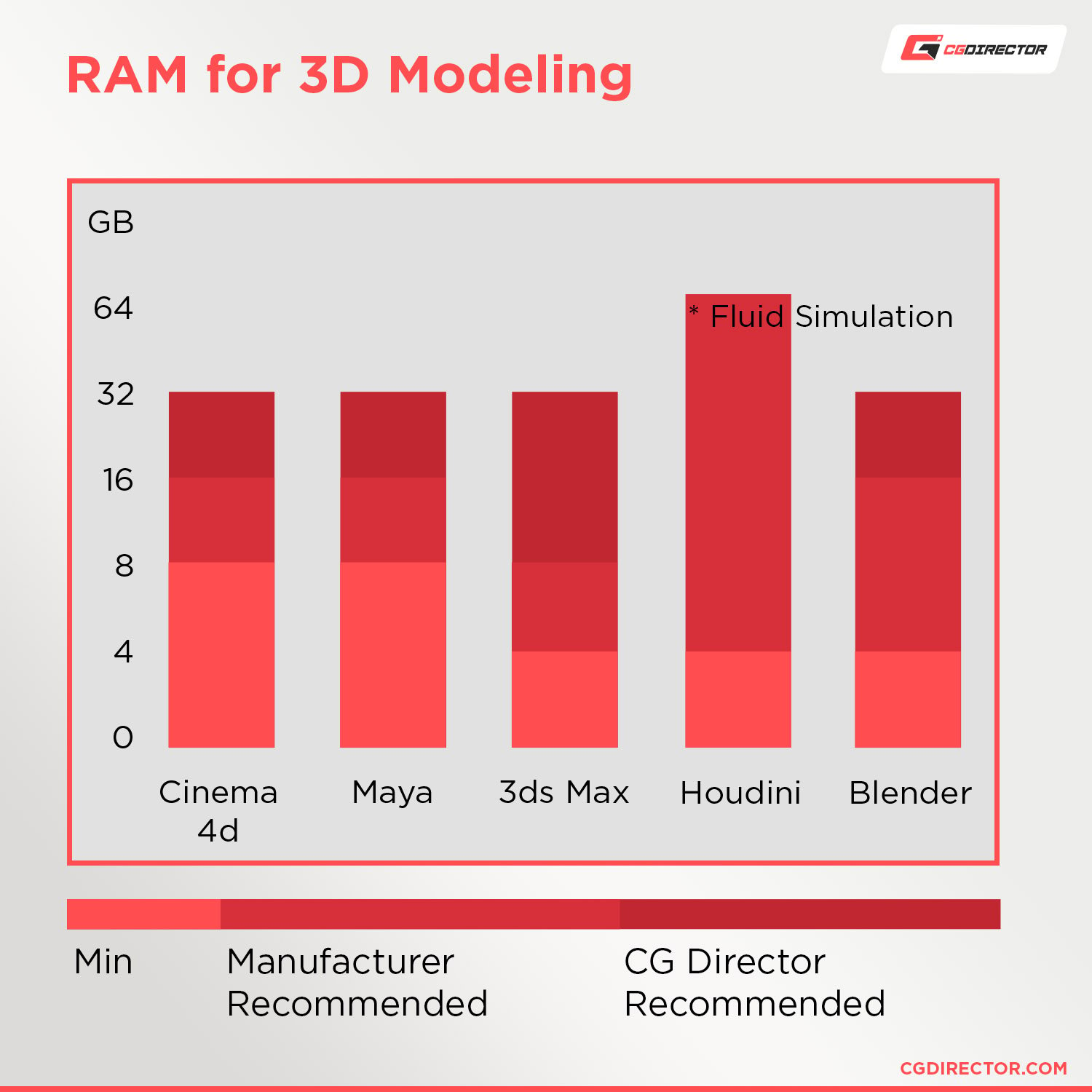
If y'all sculpt or work on loftier-poly meshes, use lots of large textures or take complex scenes with thousands of objects in them, y'all might want to get with 64GB of RAM.
16 GB of RAM can be plenty for many starting out with 3D, but usually, you outgrow this quite quickly.
If you like to optimize your hardware as much as possible, the rule for RAM clock speeds and timings is:
The lower the CL (CAS Latency) and the higher the Clock Speed, the better. So a DDR4-3200 CL15 would be slightly faster than a DDR4-2800 CL16, for case.
The third and 4th gen (5xxx series) AMD Ryzen CPUs also, benefit from higher clocked RAM.
Then at that place's something chosen Ranks, and I'll bespeak yous to our article on Retentiveness Ranks to find out if information technology'southward something you take to be concerned about (you don't).
A annotation on RAM Kits
When buying RAM, buy the full amount in a single RAM kit. RAM Kits (which are RAM Modules packaged together) are pre-tested in the Manufactory and will work well together.
Although people often say yous tin can buy some RAM now and add some more later ,RAM modules sometimes don't piece of work well together.
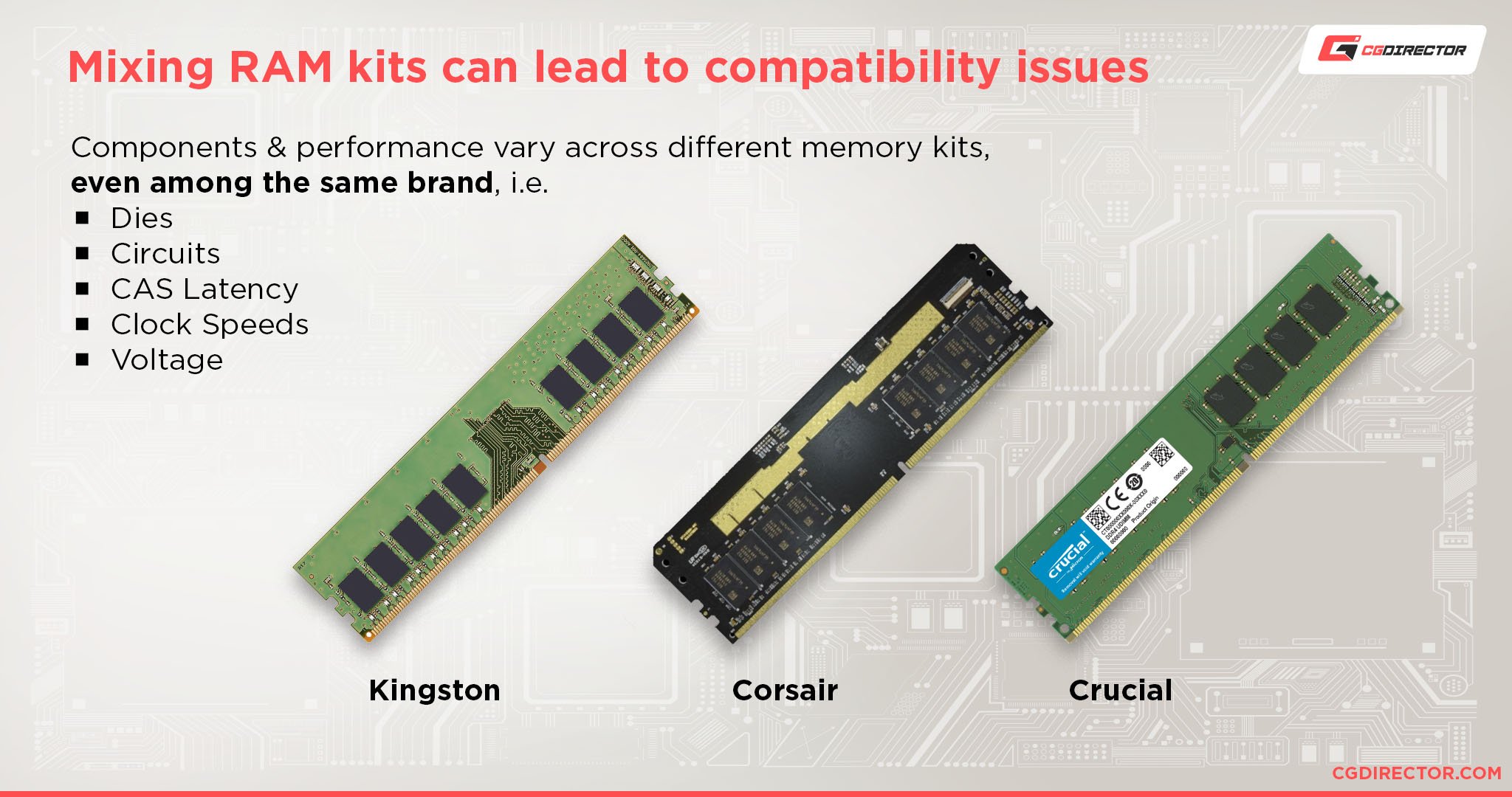
So if you are getting entirely new RAM for your PC, exist sure to get (for example) 4x8GB in a KIT and not 2x8GB + 2x8GB in two split KITs.
Why should RAM in different KITs exist dissimilar from each other?
The reason why RAM in unlike kits differ from each other is that they tin exist manufactured in different factories and different factory lines that use slightly unlike silicon, or because one RAM module might take been manufactured in 2017, while the other module was manufactured in 2019. You don't know for sure that the timing on the RAM will exist exactly the aforementioned between modules from different factories or dissimilar manufacturing dates.
Get a kit that's pre-tested. Don't mix & match Memory Modules and RAM Brands.
Good RAM Brands are Thou.Skill, ADATA, Crucial, and Corsair such every bit the Corsair 16GB Vengeance LPX Ram Kit or this 32GB Corsair RAM Kit.
Best Motherboard for 3D Modeling and Rendering
The Motherboard or Mainboard is the Hub that connects all of your hardware components together.
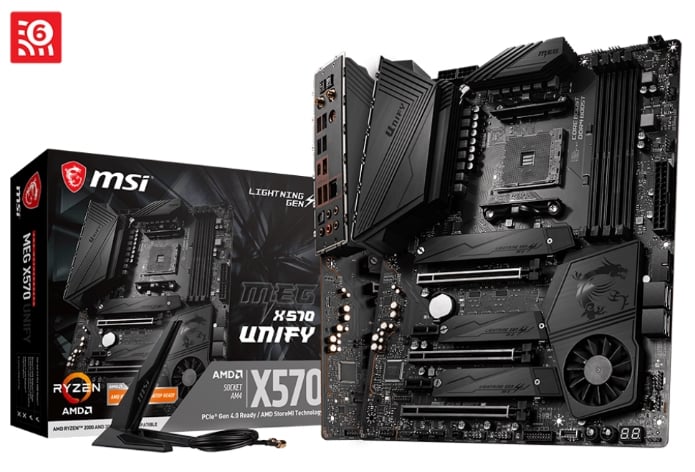
Image-Credit: MSI
It's unlikely to bear on performance all that much, but you should make sure it has all the features you might desire down the line. Some of import things to take note of are:
- CPU Socket Type: Different CPUs demand different Sockets. Make sure your motherboard has the right socket for your CPU.
- Retention Maximum: Some Motherboards/Chipsets tin can just back up a sure corporeality of RAM and only take a certain number of RAM slots. Make certain information technology supports the corporeality of RAM you want.
- The maximum amount of supported GPUs: Motherboards support a certain number of GPUs and have a sure amount of PCIe slots and lanes that your GPU will use. Make sure yous have enough for the number of GPUs you want.
- Support for M.2 (NVME Drives): If y'all desire an M.2 PCIe bulldoze, brand sure your motherboard supports this kind of drive (the motherboard's transmission is your friend).
- Size of the Motherboard: Yardotherboards come in different sizes. Make sure your motherboard fits inside your computer case (and vice versa too, of course).
I understand this might start sounding a bit complicated, and perhaps a bit too much to handle, peculiarly if you're a first-fourth dimension PC builder.
This is why I have put together a list of compatible workstations for yous in different price tiers , so you lot won't have to figure out every detail on your ain.
If you lot are leaning towards a Ryzen 5000 Serial CPU build, do check out this Article on what Motherboards are all-time for Ryzen 5000 Serial CPUs.
You tin can also have a look at our Motherboard Brands Guide which helps you navigate the Motherboard market place'south pitfalls.
All-time Storage for 3D Modeling and Rendering
The speed of your storage is responsible for a few things:
- Saving and loading your scene files
- Storing and loading your Textures, Avails, References, Rendered Frames
- Loading your Avails, Textures into RAM, VRAM when Rendering
- Swapping to deejay if your RAM is total
- Launching your Software, Operating Organisation
If you want to load your scenes speedily, you lot'll need a fast disk.
A characteristic similar autosave (which I highly recommend you always have ON) will save your scene faster if you accept a fast disk. On the other mitt, a blazingly fast deejay won't do much for your performance once your scene is loaded into RAM.
I recommend going for at least a SATA SSD such as the Samsung 870 QVO for your Bone and your Scene Files.
Consider a PCIe NVMe Grand.two SSD such as theSeagate FireCuda 530 if y'all want the fastest possible operation and don't mind spending some extra money for it. For Content-Creation workloads, I highly recommend going the NVMe Road. Cheque out our NVMe Article to find out exactly which NVMe SSD is right for you.
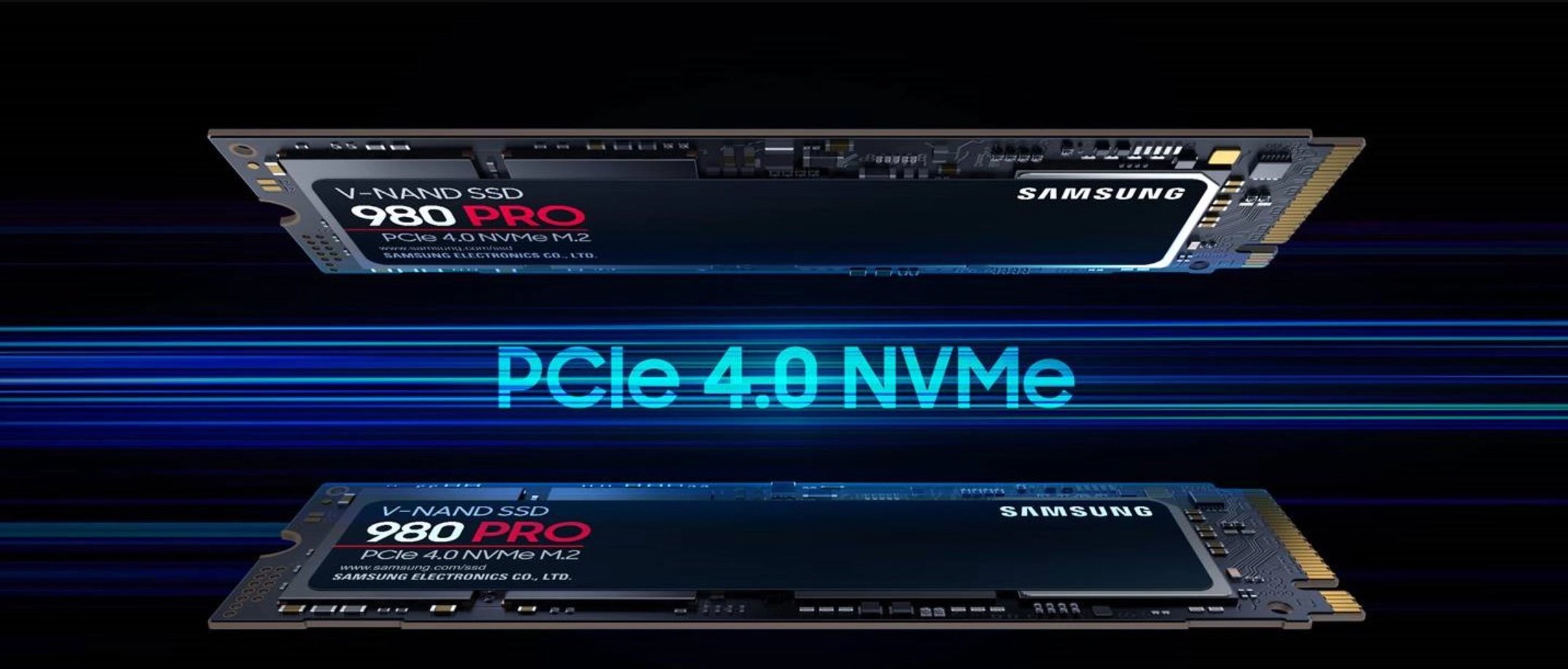
Samsung 980 PRO NVMe PCIe 4.0 SSD – Image Source: Samsung
You may also want a larger HDD to periodically backup your active Projects in case your drives break down due to unforeseeable reasons. As they tend to do in the middle of the most important Project.
With a larger Hard Drive, you can have your inactive Projects archived and only take your Active Projects on the fast Drives, saving space on your fast drives.
About PCI-E-Lanes
This section is a bit more avant-garde, merely I get this question often enough that I want to explicate information technology. Feel complimentary to skip this part.
Here'due south the Question: If mainstream CPUs such every bit an Intel 10900K, or AMD Ryzen 5900X only offer 16 PCIe-Lanes, how can you use NVME SSDs (that already demand iv PCIe-lanes) or SATA Drives, if your GPU already uses up all of the sixteen PCIe-Lanes to the CPU?
Respond: While the CPU-GPU PCIe-Lane interconnect is 16 PCIe Lanes broad, the Chipset itself tin can create 24 additional PCIe Lanes if required (on the Z370/Z390 Chipset).
The chipset lanes are continued to the CPU through a DMI link that's only 4 PCIe lanes wide (which is roughly 4GB/due south).
There could be a bottleneck in the unlikely scenario that yous continuously copy huge amounts of data (like 50GB) from 1 of your NVMe SSDs to your second NVMe SSD and if your NVMe SSD tin can read and write faster than 2GB/s.
While that type of sequential read/write is possible (with the 970 EVO information technology is), it'southward extremely rare that yous'll continuously be reading and writing sequentially for files that are of such size. If annihilation, y'all'll be reading/writing randomly and on much smaller files.
Everything except for the RAM and the GPU is connected to those 24 chipset PCIe lanes, which are themselves connected to the CPU through the DMI link that's 4 PCIe lanes wide. This includes LAN, USB, and everything else yous plug into the motherboard.
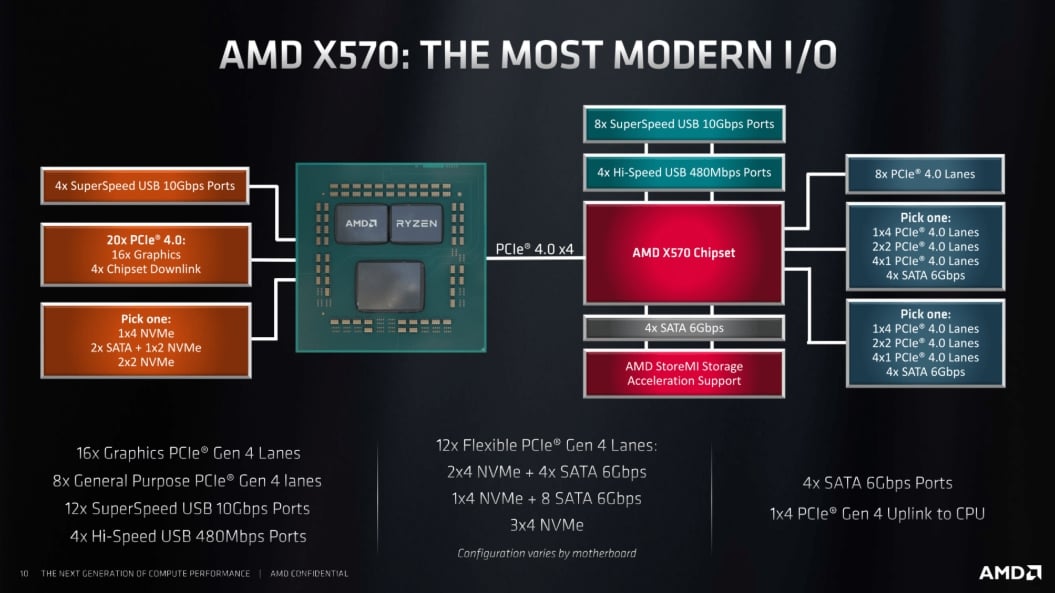
Prototype-Credit: AMD
The PCIe lanes from the chipset to the CPU are not used from the moment you plug in a new component. Instead, remember of these PCIe lanes like highway tunnels: they're always there and permit traffic through if it has to .
So y'all can attach upwards to 24 PCIe lanes worth of components to the chipset (SATA SSDs, HDDs, USBs, Ethernet cables, etc…) but they will merely connect to the CPU and employ Bandwidth when needed.
If you lot use all those components at maximum speed at the same time, then you lot would bottleneck. In such a scenario, you would need to turn towards the HEDT platform (such as the LGA 2066 or TR4) and not mainstream (1151, AM4).
There'south quite some depth to PCIe-Lane technology that you tin can use to your advantage and improve your PC's performance. Be sure to go through our Guide to PCIe-Lanes, especially if you're looking at driving multiple GPUs or a lot of storage devices.
Best Monitor for 3D Modeling and Rendering
For visually demanding workloads in the world of 3D and VFX, it's all-time to get a monitor with an IPS console . IPS brandish panels take better color and dissimilarity and a superior viewing bending.
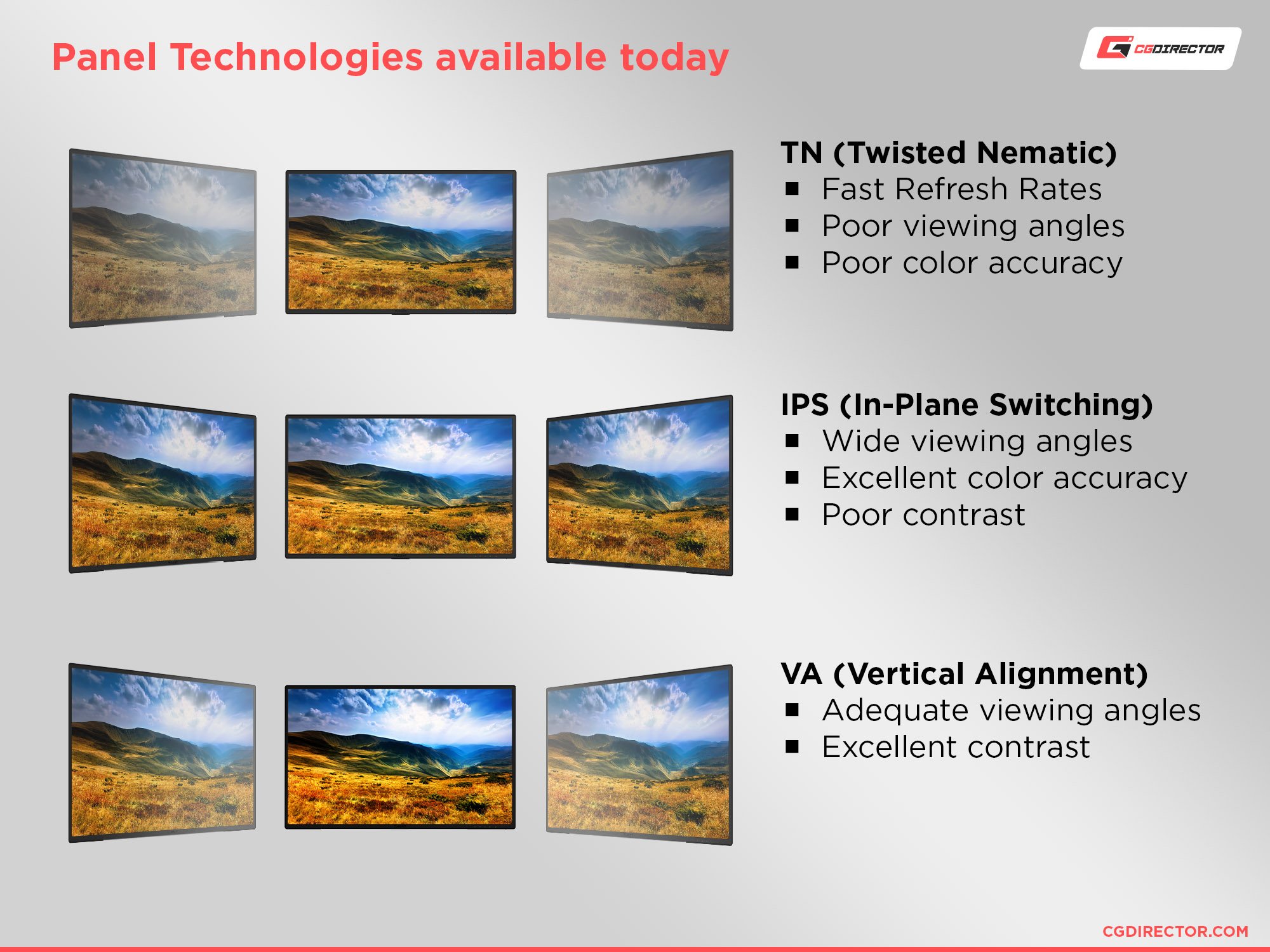
If you'll spend many hours a day staring at your monitor, y'all'll desire a non-glare (matte) monitor, which will avoid hard reflections that may distract you.
You also desire at least a Full Hd 1920×1080 monitor that nicely fits the viewport and all your software. You might even desire to consider college-resolution monitors with a 2560×1440 or even a 4K (3840×2160) resolution , so yous can fit more than of your footage, references, and software windows.
This is especially truthful if you're working on 4K advertisement and films, or on howdy-res images.
I've had great experiences working on Dell IPS monitors, such as the Dell UP2716d, but y'all might prefer a different brand.
How many Monitors exercise yous use?
-
Ii Monitors 57%, 5404 votes
5404 votes 57%
5404 votes - 57% of all votes
-
Merely one Monitor 32%, 3023 votes
3023 votes 32%
3023 votes - 32% of all votes
-
Iii Monitors 10%, 945 votes
945 votes 10%
945 votes - 10% of all votes
-
More than 3 Monitors 2%, 186 votes
186 votes 2%
186 votes - two% of all votes
Total Votes: 9558
14. May, 2020
×
You or your IP had already vote.
Check out this in-depth guide to buying the best Monitors for visually enervating piece of work, which has all the data you need for getting the best Monitor for your workloads.
Best Power Supply (PSU) for 3D Modeling and Rendering
While an expensive PSU won't increase your performance, it'southward wise to get more than than enough wattage.
Usually, you'll want around 600-750 Watt for a regular build, with an additional 250W for every additional GPU .
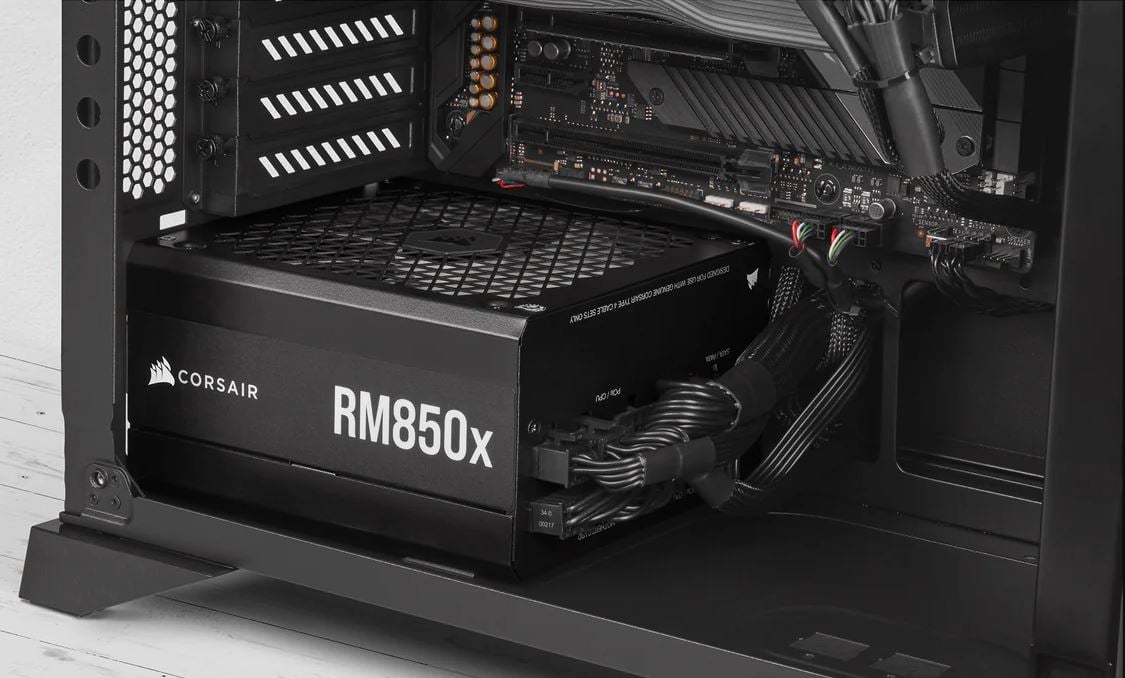
Corsair RM850x PSU inside a PC Instance – Prototype-Source: Corsair
Adept PSU brands are Corsair, Seasonic, and beQuiet.
Hither's a PSU calculator that will tell you how many watts your PSU will need depending on the hardware you lot choose.
Another affair you should consider is a Modular PSU instead of a regular PSU. Modular PSU'due south let yous detach whatever cables you don't need from it, which helps in freeing up the inside of the case and improves airflow.
Because picking the right kind of Ability Supply tin be an art in itself, nosotros've put together a guide to doing just that.
Best Instance for 3D Modeling and Rendering
Your PC's Case is another one of those components that volition touch on your Modeling or Rendering operation just marginally.
Y'all should make sure information technology is big enough to have room for your motherboard, boosted components like a bulky GPU or CPU-Cooler, and any parts you might want to add in the future. A case that is built with practiced airflow in listen volition make it easier to go along your temperatures downward – especially during sustained workloads like rendering.
For a professional workstation chances are you'll want a minimalist-looking example that reduces noise from your internal components equally much as possible and doesn't distract you from your work.
Here're some of our favorite, professional, and minimalist looking cases for 3D Modeling and Rendering:
Mid-Tower (Standard-Sized Build)
- Phanteks Enthoo Pro ATX Mid Tower Example
- Corsair Carbide Series 200R ATX Mid Tower Example
- Corsair Carbide Series 275Q ATX Mid Tower Instance
Big Tower (For lots of GPUs)
- Fractal Pattern Define Xl R2 Titanium Large Tower Instance
Build your own Computer!
The best calculator for 3D modeling and rendering is a computer that'southward fast, makes you spend less time on it, avoids you wanting to dial through your monitor, and shouldn't cost you an arm and a leg.
I get tremendous joy from building my own computers for 3D modeling, rendering, and many other use cases.
If you lot don't build your own PCs yet, I'chiliad sure you'll learn to dearest it too .
Exercise yous assemble your PC yourself or buy Pre-Congenital?
-
I assemble myself 66%, 3322 votes
3322 votes 66%
3322 votes - 66% of all votes
-
I buy Pre-Congenital / Permit others assemble my PC 34%, 1689 votes
1689 votes 34%
1689 votes - 34% of all votes
Total Votes: 5011
xiv. May, 2020
×
You or your IP had already vote.
Building your own figurer teaches yous the inner working of the various hardware components while allowing you to gradually upgrade parts if and so required and helping you discover potential problems more easily.
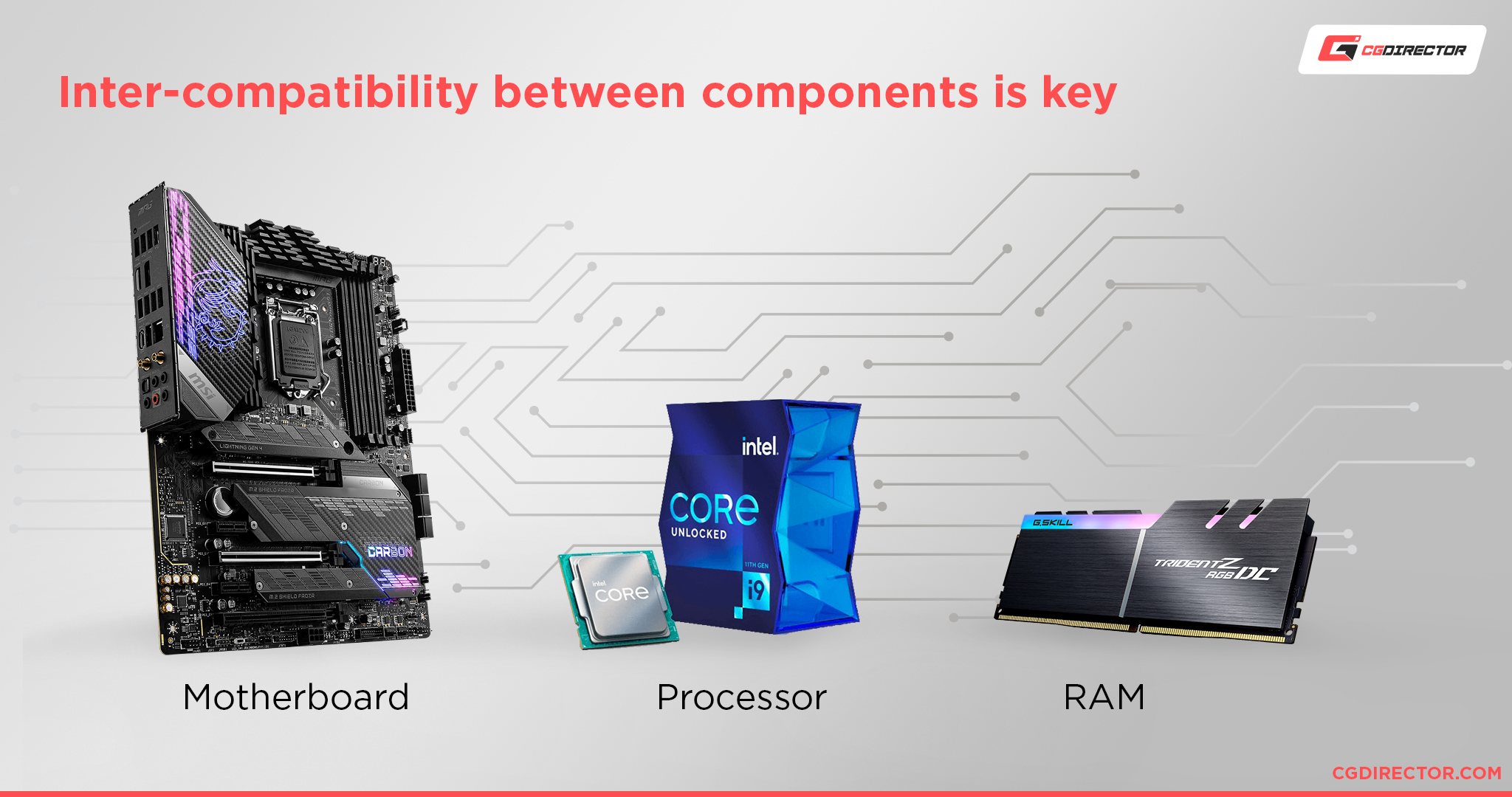
But the best role? It's a lot cheaperthan buying pre-configured computers, and information technology only takes an 60 minutes or two to get together!
I tin't stress it plenty: assembling your own calculator is not difficult . You lot more than or less just plug different parts needed to build a PC into one another and tighten some screws. The hardest part is adding a bit of thermal paste to the CPU. That'southward it!
Here'due south an easy to follow video-tutorial for you lot to follow along every bit you lot build:
Phew! That was quite a lot of theory. Allow's take a look at some uniform and functional PC builds.
Here are some Pre-Selected Builds in dissimilar Price Tiers:
Best full PC-Build Recommendations at different Price points
Best Estimator for 3D Modeling and Rendering, AMD at roughly ~900$
Some Build notes:
This lower-budget Build tin can be made fifty-fifty cheaper if you use the CPU Cooler that comes with the CPU. You lot can downgrade the CPU to a 3600 or 3300X if you demand to save more than money or downgrade the NVMe SSD to a regular SATA SSD such equally the Samsung 870 QVO.
If you want to increase performance and have some extra cash on hand, consider buying a 3700X or 5600X CPU. A 1660 Super or 1660 Ti could become you some boosted GPU performance.
All-time Reckoner for 3D Modeling and Rendering, AMD at roughly ~1500$
Some Build notes:
This is a basic AMD build that you can begin with. The Case is professional, minimalistic, and quiet and has dandy airflow.
The AMD Ryzen 5 5600X comes with excellent unmarried-cadre operation that will make your viewports extremely responsive. We often recommend an x570 Motherboard in conjunction with a 5xxx Series AMD Ryzen CPU, but you could go away with a B450 or B550 Motherboard if you are under upkeep constraints. Be sure to take a look at this commodity on the best motherboards for Ryzen CPUs, to see which 1 exactly you lot volition demand.
The Nvidia RTX 3070 packs great performance in CUDA and OptiX related workloads such as GPU rendering and is a great buy at this price-tier.
Best Computer for 3D Modeling and Rendering, AMD at roughly ~2500$
Some Build notes:
Another Build with an AMD CPU. Nosotros used to take an Intel-Build at this price range, but right now, AMD is leading the CPU contest beyond the board.
The Ryzen nine 5950X is in a league of its own. Nifty Single-Core and Multi-Cadre functioning make this the best CPU for active workloads and viewport performance you can buy right at present. The sixteen Cores offer good operation even for CPU-rendering complex scenes.
The Nvidia RTX 3080 comes with 8704 CUDA Cores which volition accelerate your work in GPU Render Engines such as Redshift, Octane, or Vray. Other Apps and plugins that support CUDA / OptiX such every bit the Adobe Creative Deject, benefit from these kinds of GPUs likewise.
Y'all can upgrade this PC with more RAM, bringing it to 64GB, which would be a solid upgrade for a true 3D-Blitheness and Rendering workstation.
Although the Samsung 980 PRO has slap-up performance in all kinds of read/write workloads, you could salve some money here and get an older Samsung 970 EVO Plus or something like an Adata XPG pcie4 SSD.
Best Computer for CPU Rendering, AMD at roughly ~5000$
This is an splendid Build that leans towards CPU Rendering Performance and slightly less towards active-working performance in tasks such as 3D Modeling or Animating.
Some notes on this build:
Equally this build is focused on CPU Rendering, the other parts such equally storage and GPU are proportionally depression-cease compared to the 64-Core Threadripper CPU. This build has an absolutely fantastic CPU Rendering Performance.
128GB of RAM is a lot. It should exist more than enough for all kinds of complex projects. You tin save some money by downgrading to 64GB or fifty-fifty 32GB though if your scenes are rather simple.
Best Computer (Render node) for GPU Rendering, AMD at roughly ~7100$
This is an excellent Build that will bring you the maximum plug & play GPU Rendering Performance (on a single Consumer Mainboard) combined with an excellent CPU for good Workstation operation. Merely it comes at a steep cost.
Some notes on this Build:
4 GPUs need a Motherboard with iv PCIe Slots that are spaced far plenty from each other to let for iv dual-Slot GPUs. This is possible with the Gigabyte X399 Designare EX Motherboard.
At ~$1,200 each, RTX 2080TIs are expensive. If you're okay with slightly slower operation, just desire to salvage a decent chunk of money, I recommend going with 4x RTX 2070 , every bit these come in at around $550 each. You'll just have 8GBs of VRAM per bill of fare, but the GPU rendering performance/cost is much meliorate.
The Case is big. It has room for 8 single-slot (or 4 dual-slot) Cards. The Power Supply should provide at least 1250W and I added some headroom here with the excellent 1600W Corsair Titanium Power Supply.
Threadripper CPUs are excellent for multi-GPU setups, as these CPUs accept 64 PCIe-Lanes to drive all of those GPUs in 16x and 8x Mode.
– All of these builds volition of course need a Keyboard, Mouse, Monitor, and Operating System to be complete, simply I'll let you figure those out on your own. –
Custom PC-Builder
If y'all want to get the best parts inside your budget you should definitely take a look at the Web-Based PC-Builder Tool that we've created.
Select the main purpose that you'll use the computer for and arrange your budget to create the perfect PC with part recommendations that will fit within your budget.
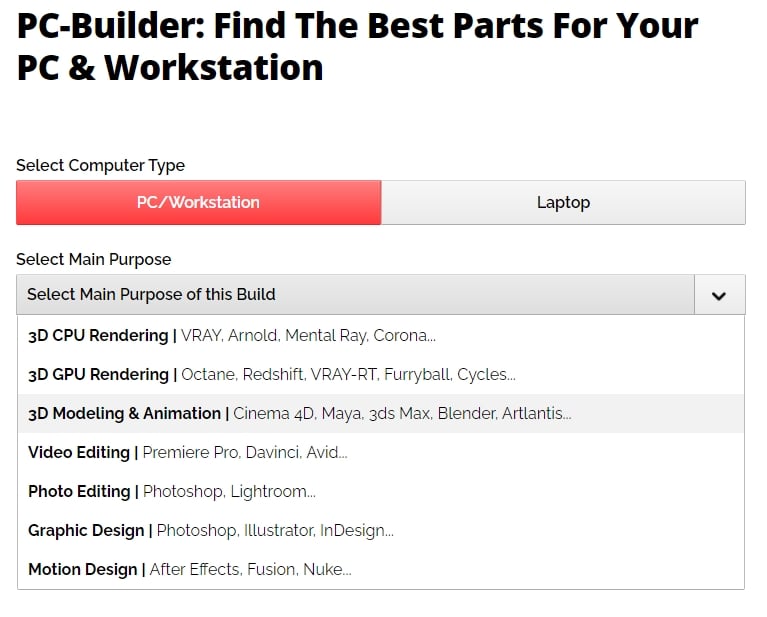
Quick PC-Architect Tool for configuring the perfect compatible PC-Build for your workloads
Be sure to cheque it out and please feel free to transport feedback my way!
If you are not quite certain yet what general kind of Estimator, Desktop, Workstation or Laptop you need and you are still looking for some beginner'southward help, bank check out this commodity on finding exactly what kind of Computer y'all need.
Want to be more mobile?
Simply a quick reminder for anyone who would like to be more mobile instead of working on a stationary Desktop PC or Workstation.
I have written an commodity about what's of import in a Laptop for 3D Modeling and Rendering and Laptop for Animation if that's a direction that interests yous too. Go bank check it out!
For CPU rendering, this article on the best CPU for rendering tin can help you out.
Over to you lot
What kind of Computer or Workstation are you lot building? Let us know in the comments or ask our experts annihilation well-nigh PC-Building in our forum.
Source: https://www.cgdirector.com/best-computer-3d-modeling-rendering/
0 Response to "deep ex report for 3d drawing"
Enviar um comentário